
How to Build a Deck This Summer (Without Overbuying a Single Board)
A backyard deck changes how you use your house. Your morning coffee gets a new spot, weekend dinners move outside, and the yard finally feels like an extension of your home instead of something you mow. Learning how to build a deck this summer is more approachable than most homeowners think, as long as you plan your materials before you plan your weekend.
The hardest part of a deck project isn't the building; it's the buying. You either overorder lumber and eat the cost of returns, or you underestimate and make three extra trips to the store mid-project. Either way, guesswork eats into the time you wanted to spend actually building.
How to Build a Deck: Start with a Sketch, Not a Shopping Cart
You need a rough drawing of your deck before you touch a single board. You sketch the footprint, mark where it attaches to the house, and note any stairs or landings. This sketch becomes the foundation for every material decision that follows, so take the time to get the dimensions right before you start pricing anything out.
Most first-time builders underestimate how much the shape of a deck changes the materials list. A simple rectangle uses lumber efficiently with minimal waste. At the same time, an L-shape or a deck with multiple levels adds extra framing, more joist hangers, and additional footings you may not have accounted for at first glance. Walk your sketch through each corner and transition point before you finalize it, since this is where most quantity mistakes happen.
Pressure-Treated Lumber Handles Your Structure
Your frame, joists, and posts all need pressure-treated lumber rated for ground contact or above-ground use, depending on placement. You get rot resistance and insect protection from this wood, which matters since this part of the deck carries the entire structural load and sits closest to moisture.
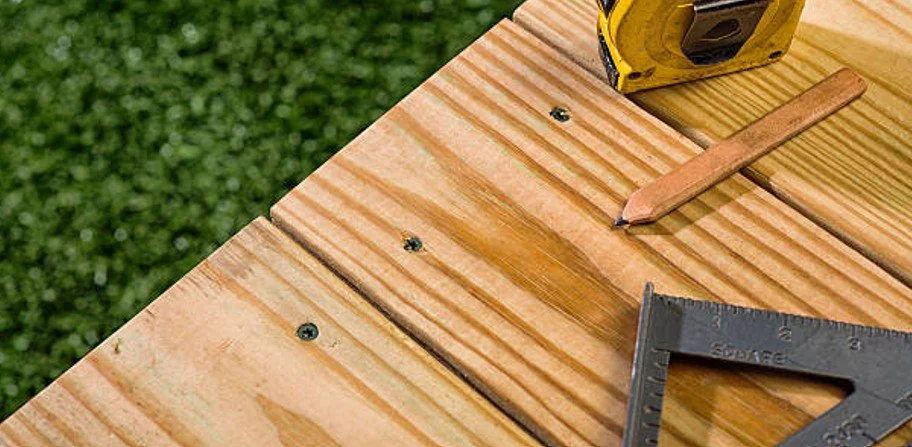
Ground contact rated lumber goes anywhere the wood touches soil or sits within a few inches of grade, including posts set in concrete. Above-ground rated lumber works for joists, beams, and framing that stays elevated and dry most of the time. Using the wrong rating in the wrong spot is one of the most common mistakes that shortens a deck's lifespan, so check the tag on every board before it goes into your cart.
Composite Decking Covers Your Surface
You skip the annual staining routine when you choose composite decking over traditional wood boards. You pay more upfront but save weekends down the road, since composite doesn't warp, splinter, or need refinishing the way standard lumber does.
Traditional wood decking costs less per board but asks for a yearly commitment of cleaning, sanding, and resealing to keep it from graying and cracking. Composite decking holds its color and texture for years with nothing more than an occasional wash, which makes it the better fit if you would rather spend your weekends using the deck instead of maintaining it.
The Hardware That Holds Your Deck Together
A deck build comes together fastest when you have the right hardware on hand before you start.
Joist hangers connect joists securely to the ledger board
Post brackets anchor posts to footings without shifting
Deck screws rated for exterior use resist corrosion and popping
Stain or sealer locks out moisture and UV damage once the build is complete

You skip a return trip when you buy a few extra fasteners up front, since hardware costs little compared to the time lost on a second store run.
Concrete Sets Your Posts and Keeps Your Structure Level
Each post needs a footing dug below the frost line and set in concrete mix to stay stable through Iowa's freeze-thaw cycles. This step doesn't get skipped no matter how tempting it is to rush toward the parts of the build that feel more exciting.
When ground freezes, the soil expands and pushes upward, and a footing set above the frost line gets lifted right along with it. Once the ground thaws and settles back down, that post no longer sits where it started, and your whole deck can shift, sag, or pull away from the house over a single winter. Digging the extra depth now costs you an afternoon. Skipping it costs you a rebuild.
How to Build a Deck: Let Our Estimator Do the Math for You
Board footage, fastener counts, and concrete bags all depend on your exact deck dimensions, and eyeballing it leads to either leftover lumber or a frustrating mid-project supply run. Our free estimator services solve that directly. You plug in your deck size and layout, and the tool generates a complete materials list calculated for your specific project, down to the boards, hangers, screws, and concrete bags you actually need.
Once you have your list, our team can answer any questions about board spacing or local code requirements before you start cutting. If you want layout inspiration first, our outdoor living design ideas walk through options that pair well with different yard sizes.
Building your own deck pays you back every weekend it's up. The hardest part isn't the carpentry; it's knowing exactly what to buy before you start. Connect with our estimator for free, fast results built for DIYers, and get your exact materials list today, before you buy a single board. Akin Building Centers has everything you need to bring your deck to life.