
Deck vs. Patio: Which Outdoor Addition Is Right for Your Home This Summer?
The deck vs. patio decision is one of the first things to work through when you are ready to add an outdoor living space. It extends how you use your property and adds real value. You get a dedicated spot to relax, entertain, and enjoy the warmer months. The right choice depends on your yard, your budget, and how you plan to use the space. The right choice depends on your yard, your budget, and how you plan to use the space.
A deck and a patio serve similar purposes but differ significantly in cost, construction, maintenance, and where they work best. Understanding those differences before you commit saves you from a costly change of direction mid-project. Here is what you need to know to make the right call.
What Sets a Deck Apart From a Patio
Deck vs. patio comes down to one fundamental difference: a deck is an elevated structure built above grade, while a patio sits directly on the ground. That distinction drives nearly every other difference between the two, from materials to installation complexity to long-term upkeep.
Decks attach to the home or stand freestanding and typically use wood or composite decking boards over a structural frame. They work well on sloped lots where building a level surface at grade would require significant excavation.If your backyard drops away from the house, a deck often makes more practical sense than a patio. Getting a clear picture of your outdoor space before you start helps you weigh site conditions against your budget before any decisions are locked in.
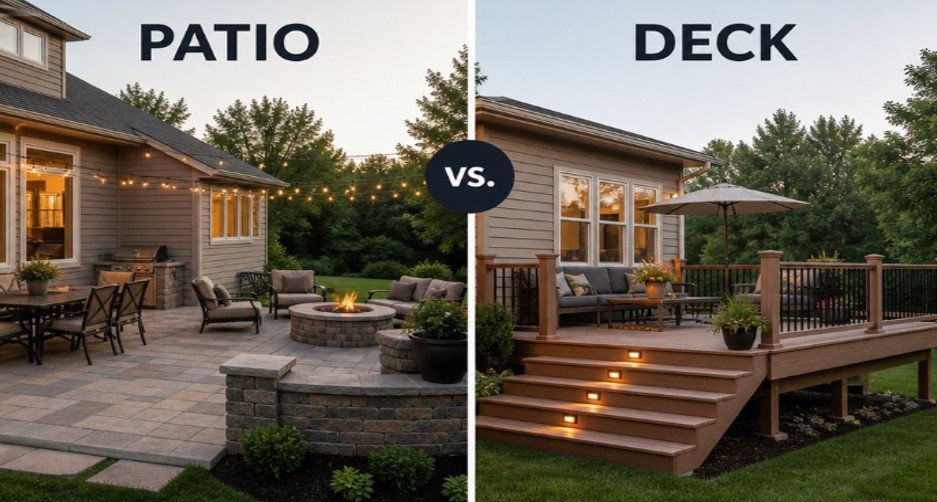
Patios sit on a prepared base of gravel and sand, with a surface layer of concrete, pavers, brick, or natural stone. They connect directly to the existing landscape and tend to feel more integrated with the yard. Flat or gently sloping lots are ideal for patio installations.
Cost Comparison: Deck vs Patio
Deck vs. patio costs vary depending on materials, size, and site conditions. Patios generally cost less to install than decks of comparable size. A basic poured concrete patio sits at the lower end of the cost range. Decorative paver patios run higher but still typically come in below a wood or composite deck of the same square footage.
Decks cost more upfront because of the structural framing, hardware, and labor involved. Composite decking adds to that cost but reduces long-term maintenance expenses. Pressure-treated wood decks are the more affordable entry point. They do require regular staining or sealing to hold up through Iowa winters and humid summers.
Long-term costs matter as much as the upfront price. A concrete patio needs very little maintenance beyond occasional sealing. A wood deck needs annual attention to stay in good condition. Choosing the right lumber from the start makes a significant difference in how well it holds up over time.
Maintenance: What Each Option Requires
Deck vs. patio maintenance is one of the clearest deciding factors for busy homeowners. Each option comes with a different level of ongoing commitment. Knowing what to expect up front helps you choose the one that fits your lifestyle.
Patios need very little attention after installation. Concrete and paver surfaces require occasional cleaning and resealing. Individual pavers that shift or crack can be lifted and reset without replacing the entire surface.
Wood decks require consistent upkeep. You need to clean, sand, and reseal or restain the surface every one to two years. Iowa's temperature swings and precipitation levels make that routine especially important.
Composite decking reduces that maintenance burden significantly. You still need to clean it periodically, but composite boards do not rot, splinter, or require refinishing. Composite and PVC decking come in a range of profiles and price points, so there is likely an option that fits your project without stretching the budget.

Which Works Better for Your Yard
Deck vs. patio suitability depends heavily on your specific yard conditions. A sloped lot almost always favors a deck. A flat yard gives you a genuine choice between the two.
Think about how you plan to use the space. If you want a surface that flows naturally into the lawn for kids and pets, a patio at grade level works better. If you want an elevated outdoor room that feels separate from the yard, a deck delivers that experience more effectively.
Consider sun exposure and shade, too. A deck attached to the back of the house can be positioned to take advantage of natural shade from the roofline in the afternoon. A freestanding patio gives you more flexibility in placement but may need a pergola or shade structure added later. Working through layout and orientation with a designer before you commit saves a lot of guesswork once construction starts.
Permits and Planning
Both decks and patios may require permits depending on size and local regulations. Decks almost always trigger a permit requirement because of the structural framing and attachment to the home. Ground-level patios under a certain square footage often do not, but it is worth checking with your local municipality before you break ground.
Planning your project early gives you time to navigate permit requirements without delaying your build timeline. It also gives you room to get accurate material quantities together before you order. A project estimator can help you work through scope, materials, and sequencing so nothing gets missed before construction starts.
Making the Call
Deck vs. patio is ultimately a decision shaped by your yard, your budget, and how you want to use the space. Patios offer lower cost, minimal maintenance, and a seamless connection to the landscape. Decks offer elevated living space, better performance on sloped lots, and a more defined outdoor room feel.
Either way, the materials you choose and the planning you put in upfront determine how well that space holds up and how much you enjoy it over time.
Not sure where to start? Book a free estimate with a project estimator and get a clear picture of what your outdoor space could look like.