
Why an Outdoor Ceiling Fan Is One of the Smartest Summer Upgrades You Can Make
An outdoor ceiling fan does more than keep you cool. It extends how long you can comfortably use your covered porch, patio, or outdoor living space on hot Iowa summer days. For a relatively small investment, it transforms an underused outdoor area into a spot you actually want to spend time in.
The difference between a space you pass through and one you genuinely enjoy often comes down to comfort. Heat and humidity make outdoor spaces feel oppressive in Southwest Iowa summers. A well-placed outdoor ceiling fan changes that without a major renovation or a significant budget.
What Sets an Outdoor Ceiling Fan Apart From an Indoor One
An outdoor ceiling fan is built to handle moisture, temperature swings, and UV exposure. A standard indoor fixture deteriorates quickly in those conditions. The rating system matters here. Fans rated for damp locations suit covered spaces like screened porches and patios protected from direct rain. Fans rated for wet locations withstand direct exposure to rain and moisture. Those are the right choices for open pergolas and uncovered structures.

Using an indoor fan in an outdoor space is a common mistake. The motor, blades, and finish on a standard indoor fan deteriorate quickly in outdoor conditions. Choosing the right fixture from the start saves you from replacing it within a season or two.
How an Outdoor Ceiling Fan Improves Comfort
Outdoor ceiling fan performance comes down to airflow. A well-sized fan creates a wind chill effect that makes the air feel several degrees cooler than the actual temperature. On a humid Iowa afternoon, that difference is noticeable within minutes of turning it on.
In addition, fans also help with insects. Moving air makes it harder for mosquitoes and other small insects to hover around your space. As a result, that is a practical benefit most Iowa homeowners appreciate without needing much convincing after a summer evening outside.
Covered porches and patios without fans often sit unused during the hottest part of the day. An outdoor ceiling fan extends the usable hours of that space. As a result, it becomes a more consistent part of your daily routine when the temperature is no longer working against you. If you are already thinking about broader outdoor improvements, planning the full layout before you commit to individual upgrades helps everything work together more effectively.
Choosing the Right Outdoor Ceiling Fan for Your Space
Outdoor ceiling fan selection depends on three main factors: blade span, ceiling height, and the size of the space you want to cool.
Blade span should match the size of your covered area. Spaces up to 75 square feet work well with a 29 to 36-inch fan. Spaces between 75 and 144 square feet need a 36 to 48-inch fan. Larger covered patios and porches over 144 square feet benefit from a 52-inch fan or two smaller fans positioned for even coverage.
Ceiling height determines the mount type. Standard mount works for ceilings eight feet or higher. Low-profile or hugger mounts suit ceilings under eight feet where clearance is limited. Downrod mounts bring the fan lower on vaulted or higher ceilings to keep the airflow closer to where people actually sit.
Motor quality affects long-term performance. A well-built motor runs quietly, handles humidity without rusting, and maintains consistent airflow over years of use. Cheaper motors struggle with outdoor conditions and tend to become noisy or unbalanced over time.
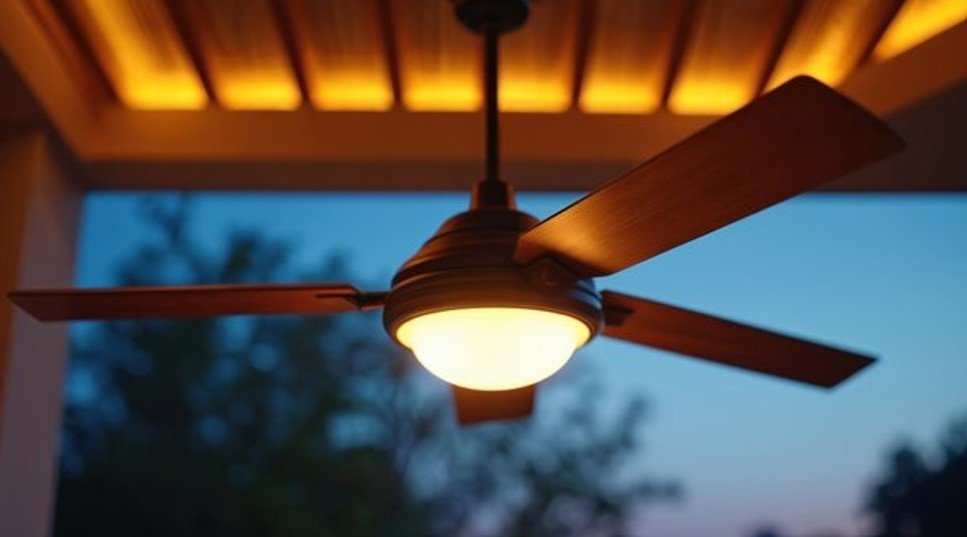
There are range of styles, sizes, and price points, so there is likely an option that fits your space without overcomplicating the decision. If placement, wiring, or how a fan fits into a broader porch or patio project feels unclear, working through it with a designer early keeps the project on track.
Before You Install: What You Need to Know
Outdoor ceiling fan installation is a manageable DIY project for most homeowners with an existing electrical box in place. The box must be rated to support a ceiling fan, not just a light fixture. Fan-rated boxes handle the weight and movement of a spinning fan over time. A standard light fixture box is not designed for that load and can fail.
If no electrical box exists in your covered outdoor space, the project moves into wiring territory. Most homeowners prefer to hand that part off to a licensed electrician. Either way, getting an accurate picture of your project scope before you start prevents mid-project surprises.
A Small Upgrade With a Noticeable Return
An outdoor ceiling fan is one of those upgrades that pays off immediately and consistently. You feel the difference the first time you sit outside on a hot afternoon with it running. The comfort improvement is immediate, the installation is straightforward, and the cost is reasonable relative to the impact it has on how much you use your outdoor space.
If you are making other improvements to your covered porch or patio this summer, a fan is one of the last pieces to add, but one of the first you will notice. There are also other fast upgrades worth pairing with it, and the quick DIY projects guide covers several that help finish the space properly.
Shop ceiling fans and accessories at Akin Building Centers or order online with free ship-to-store at your nearest location.