
How to Refresh Your Home’s Exterior This Summer (and Save Money Doing It)
A painting crew for your home's exterior often costs several times more than the work itself. A lot of that price covers labor you can handle on your own. A DIY exterior house paint project takes a weekend or two of effort. The savings are real, especially on a single-story home with straightforward siding.
The part that trips people up is not the paint job itself. It is the amount of paint to buy. That is where most homeowners either overspend or fall short mid-project. A little planning up front solves both problems before they cost you time or money.
Start With Prep Work First
Every exterior paint job depends on the prep work underneath it. Skip this step and even premium paint peels or fades within a season. A few tasks make the biggest difference:
Power wash the entire exterior to clear away dirt, mildew, and chalky residue.
Scrape and sand any peeling or cracked paint down to a smooth edge.
Fill cracks and gaps with exterior caulk before you prime.
Prime bare wood or patched spots so the topcoat bonds evenly.
Let the surface dry fully after you wash it. Give it a full day before you touch a brush or roller. Wet siding traps moisture underneath the new coat. That moisture works its way back out as bubbles or peeling within a year.
How Much Paint Do I Need for Your Exterior Refresh?
Once prep is done, the paint math is straightforward. Most exterior paint covers 250 to 400 square feet per gallon. Rougher or more textured siding sits on the lower end since it absorbs more product per coat.
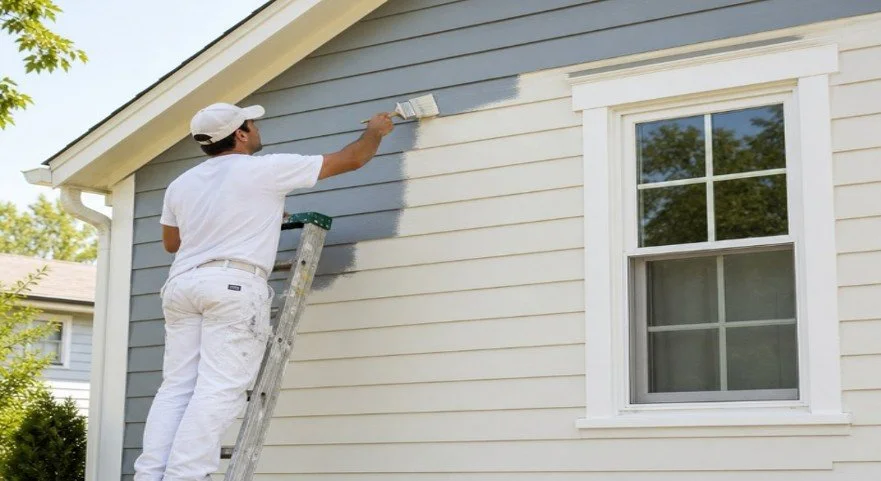
Measure each wall's height and width, then subtract windows and doors from the total. Our free Estimator turns those measurements into an exact gallon count. It also gives you separate totals for trim or accent colors that need a different paint. That one extra step prevents the most common mistake homeowners make: too much paint sitting unused in the garage once the job wraps up.
Choose Exterior Paint and Primer That Hold Up
Exterior paint has a tougher job than anything you would use indoors. Look for strong UV resistance, since sun exposure fades color faster than almost any other factor. A quality primer matters just as much, particularly over bare wood or repaired areas. It gives the topcoat a surface it can actually grip.
Color choice affects durability too. Lighter shades reflect heat and hold their finish longer. Darker shades absorb more sun and may need a fresh coat sooner than you expect. Test your chosen color on a small patch first. Check it in both morning and evening light before you commit the whole house to it.
Exterior paint and primer come in finishes built for real weather, from summer heat to winter freezes. Some formulas also resist mildew growth better than others. This matters most on shaded walls that stay damp longer after rain.
Handle DIY Siding Repairs First
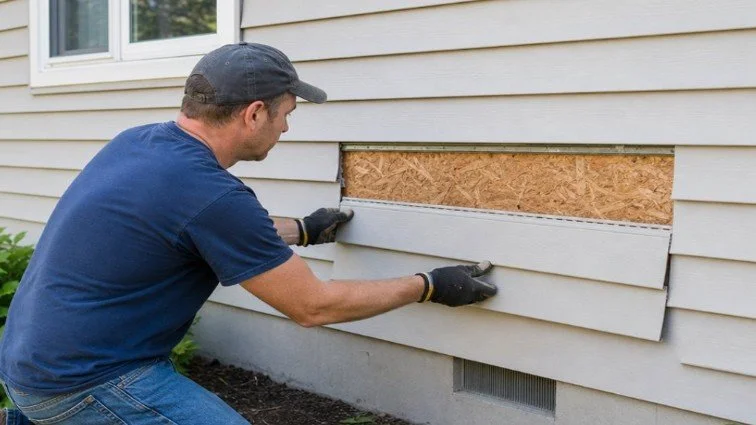
Paint covers color, not structural problems. Cracked, warped, or missing siding boards need attention before the topcoat goes on. Otherwise, the new paint will only draw attention to the damage underneath. A DIY siding repair on a handful of boards is a manageable weekend task. It also costs far less than a full wall replacement.
Match any new boards to your existing siding style and profile before you buy, since most exteriors have a close match among available siding and trim options, though even a slight difference in width or pattern can stand out under fresh paint. If several sections of the house need repair, tackle them all in one trip rather than one at a time, so you paint the whole exterior in a single pass instead of circling back later. Some repairs are simple enough to handle yourself, while others are best left to the professionals.
Rent the Tools That Make the Job Go Faster
Quality rollers, brushes, and sprayers show up in how even your final coat looks. Cheap tools tend to streak or shed bristles into wet paint. A pressure washer also turns hours of manual scrub work into a fast, thorough pass during prep.
Rather than buy equipment you will use once a year, you can rent a pressure washer for the day you need it. A sprayer rental is worth a look too, especially on a larger home. It cuts total paint time compared to a roller on every wall. Both rentals come with the same equipment a professional crew would use. Your finish quality does not have to suffer just because you did the work yourself.
How much paint do you actually need? Our Estimator calculates coverage from your home's square footage. You only buy what you need and not a drop more. Start your free estimate today at Akin Building Centers, and stop by your nearest location if you want help with the right products in person.