
How to Choose the Right Ceiling Fan for Every Room in Your Home
A ceiling fan does more than move air around a room. The right one improves comfort year-round. It also takes real pressure off your HVAC system. The wrong one hums, wobbles, or barely moves air at all. Knowing how to choose a ceiling fan comes down to a handful of details that most homeowners overlook until the fan is already hanging.
Get the sizing and rating right from the start. A ceiling fan becomes one of the most cost-effective upgrades you can make in any room of your home.
How to Choose a Ceiling Fan Based on Room Size
Room size drives blade span more than any other factor. A fan that is too small struggles to move air through a larger room. An oversized fan overwhelms a small space and looks out of proportion. Rooms up to 75 square feet do well with a 29 to 36-inch fan. Rooms between 76 and 144 square feet call for 36 to 42 inches. Larger rooms up to 225 square feet need 44 to 50 inches. Anything bigger benefits from a 52-inch fan or larger, sometimes paired with a second fan for even coverage.
Measure your room before you shop rather than guessing. Even a few feet of difference can push you into the next size bracket. If you are outfitting more than one room at once, work from a full list of measurements upfront. This saves you from returning fans that turn out to be the wrong size once they are hanging.
Match Blade Span and Ceiling Height for Proper Airflow
Blade span works together with ceiling height to determine how well a fan actually performs. A fan mounted too close to the ceiling loses airflow efficiency. One hung too low creates a safety hazard and an awkward visual in the room. Standard ceilings around eight feet call for a flush mount fan. Ceilings nine feet or taller perform best with a down rod that drops the fan to the ideal height.
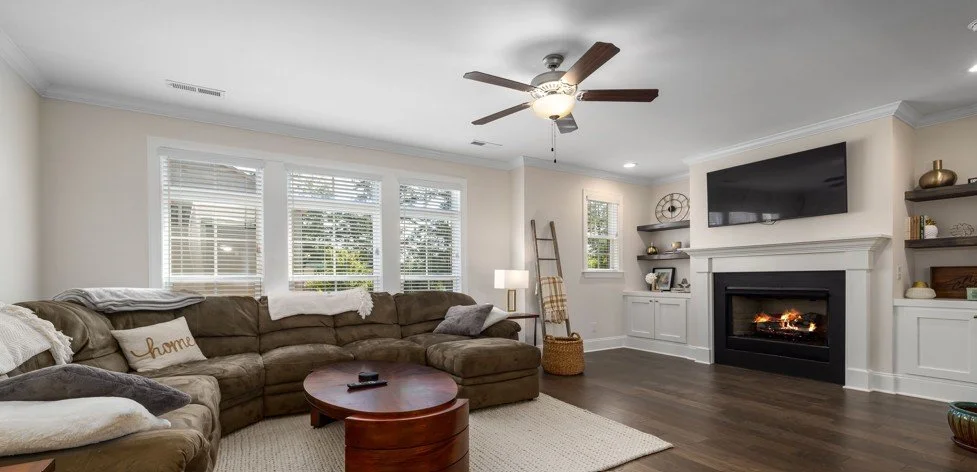
The sweet spot for blade height sits between seven and nine feet from the floor. Anything lower cuts into headroom. Anything higher reduces the airflow you feel at seating or standing level. Vaulted or sloped ceilings need a specific sloped mount kit rather than a standard flush mount, since a standard mount cannot angle correctly against a pitched ceiling.
How to Choose a Ceiling Fan Rating for Indoor or Outdoor Use
Not every ceiling fan works in every location, and this is where a lot of buyers make a costly mistake. A few rating distinctions matter before you install a fan in any space:
Dry-rated fans work only in fully enclosed, climate-controlled indoor spaces.
Damp-rated fans handle covered porches and screened areas exposed to humidity but not direct rain.
Wet-rated fans hold up in fully exposed outdoor spaces where rain, snow, and direct sun hit the fan directly.
Installing a dry-rated fan in a covered porch shortens its lifespan significantly. The same goes for a damp-rated fan placed somewhere exposed to direct weather, and either mistake can create an electrical hazard over time.
How to Choose a Ceiling Fan for Energy Efficiency
Energy efficiency varies quite a bit between fan models, even at similar price points. Look for a fan with an ENERGY STAR rating, since these models move air more efficiently per watt than standard fans. A ceiling fan run in the summer allows you to raise your thermostat a few degrees without losing comfort. In winter, reversing the blade direction pushes warm air down from the ceiling instead of letting it collect overhead.

Lights and fans built with efficient motors and reversible settings give you year-round value. You get real benefit beyond just the summer months.
Consider Style and Light Kit Options for Every Room
A ceiling fan is a visible fixture in most rooms, so style matters alongside function. Modern rooms often pair well with a fan that has slim blades and a simple finish. A traditional room might call for a fan with a wood tone finish and a classic light kit. Many fans now come with integrated LED lighting. This saves you from installing a separate fixture and simplifies the overall look of the room.
Remote control and smart home compatible options add convenience. You can adjust speed and lighting without a wall switch. This matters most in rooms with vaulted ceilings where a pull chain sits out of reach. If you are refreshing a room's look alongside a new fixture, an interior paint refresh is a natural project to pair with the upgrade. New paint and a new fan together make a room feel completely updated.
Get the Installation Details Right Before You Buy
Not every ceiling box in an existing home is rated to support the weight and motion of a ceiling fan. A standard light fixture box often lacks the bracing a fan needs. Installing a fan on the wrong box risks the fixture pulling loose over time. Fan-rated electrical boxes and mounting hardware solve this before it becomes a problem. Swapping the box is a simple step to add if you are already replacing a light fixture with a fan.
If you are unsure whether your existing wiring or box can support a new fan, confirm it before you buy rather than after the fan is already home.
Order the Right Fan Without the Guesswork
With so many size, rating, and style combinations available, narrowing down the right fan for your specific room can feel overwhelming. If the model you want is not on the shelf at your local store, ordering online with free ship-to-store pickup gives you access to a far wider selection without an extra trip across town. For a whole-home fan project across multiple rooms, our design team can help you plan sizes and styles that work together room to room.
Shop ceiling fans at Akin Building Centers in-store or online with free ship-to-store at your nearest location.